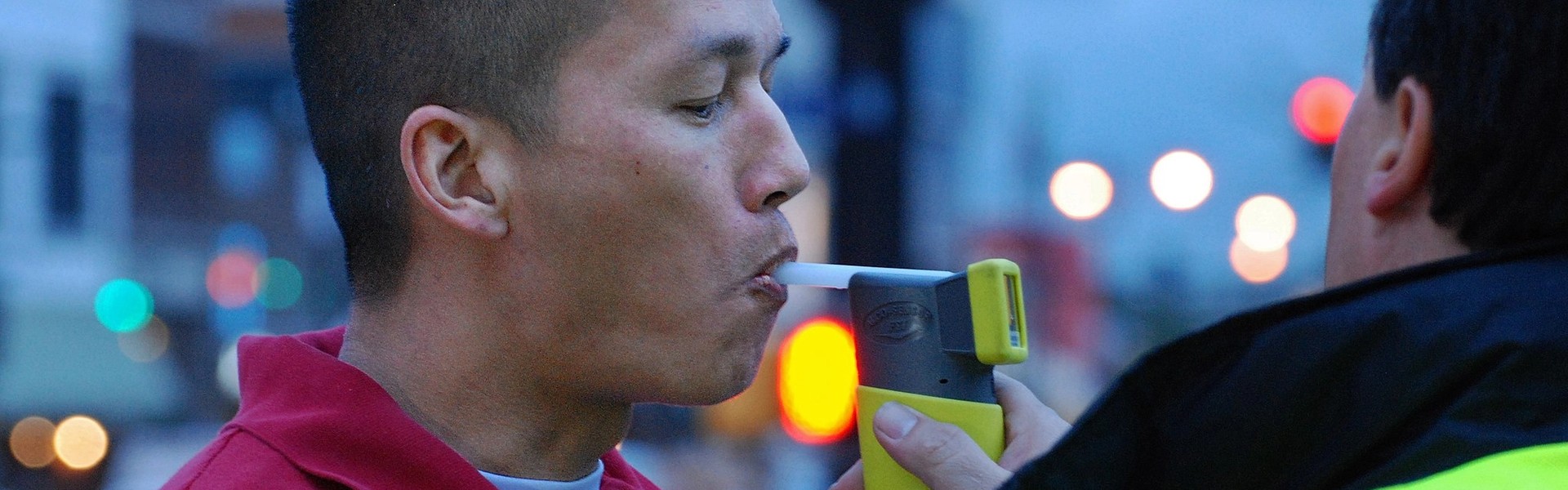

To blow or not to blow, that is the question -- at least for DUI lawyers. If an officer asks you to submit to a field sobriety test, breath test, or blood test to determine whether you are driving under the influence, should you do it?
Generally speaking, our advice is: If you don’t know, don’t blow. Here’s why.
What DUI Tests Can Police Ask Me to Take?
An officer has several ways to test you to see if you’re impaired, all with different levels of scientific certainty.
The Preliminary Breath Test (PBT) is a small, handheld device that officers often use during roadside traffic stops. Its purpose is to give police a quick reading of your blood alcohol content (BAC).
Because the PBT prioritizes speed and portability, it is generally considered less reliable than other testing methods. Importantly, the results of a PBT are generally not admissible as evidence of intoxication in court. Refusing the PBT generally does not carry the same automatic driver’s license consequences that may come with a refusal of the State’s Test. The PBT can be thought of as an investigative tool for police, not actual evidence against you.
The State’s Test is the official breathalyzer test administered after an arrest. Unlike the PBT, it is conducted by using larger, calibrated machines that provide much more accurate and reliable results.
The results of the State’s Test may be admissible in court and can significantly impact both the criminal case and any driver’s license consequences. Refusing the State’s Test can also carry important consequences under Oklahoma’s implied consent laws.
A test of your blood is the most effective way for authorities to confirm you are legally too impaired to drive. A blood test is also generally the most difficult form of chemical evidence to challenge in court and could inadvertently reveal legal medications like state-approved medical marijuana. However, because a blood draw is considered a search under the Fourth Amendment, officers generally must obtain a search warrant before requiring a blood sample, unless an exception applies. That’s not always practical from a roadside late at night, so police turn instead to other available means.
Standardized field sobriety tests are observational tools that officers use to evaluate impairment. These tests, including walking heel-to-toe in a straight line, following an officer’s pen with your eyes, or standing on one leg, rely heavily on officer observations and may be challenged, depending on how they were administered and evaluated.
What Is Implied Consent in Oklahoma?
According to Oklahoma Statutes Title 47 § 751, by operating a motor vehicle within the state, drivers are generally deemed to have given consent to submit to chemical testing if they are lawfully arrested by an officer who has reasonable grounds to believe the driver is under the influence of alcohol or drugs.
Let’s break down the elements of this definition of implied consent:
- Arresting officer: The test must be administered at the direction of an authorized law enforcement officer. The officer determines which test to administer.
- Chemical testing: This could be a breath or blood test to determine the presence of alcohol or drugs.
- Lawfully arrested: The traffic stop and arrest must be carried out according to legal procedures and based on probable cause.
- Reasonable grounds: The officer must have specific, factual reasons to believe the person is driving under the influence. This means things like slurred speech, bloodshot eyes, a smell of alcohol, or swerving in the road.
Essentially, if you’re pulled over and the officer suspects impairment, they’ll ask you to take the State’s test. Under Oklahoma’s implied consent law, refusing the State’s Test can result in significant driver’s license consequences and may require participation in programs such as IDAP in order to continue driving legally.
Similarly, submitting to the State’s Test and registering above the legal limit may also result in significant driver’s license consequences in addition to any criminal charges that may arise from the DUI investigation.
Should You Refuse a Breathalyzer?
There is no universal right answer as to whether refusing a breathalyzer is good or bad advice, but in general, our advice is: If you don’t know, don’t blow.
Given the severity of DUI consequences in Oklahoma (especially after SB1627 became law earlier this year), it’s usually better to refuse if you think there’s any chance that you’ll blow above a .08.
You Can Get Arrested Either Way
Police do not need a warrant to arrest you for a DUI, even if you refuse sobriety testing. An officer may make an arrest based on their personal observations, even if testing is refused. An officer may rely on signs of impairment such as the odor of alcohol, slurred speech, bloodshot eyes, or observed driving behavior when making an arrest decision.
While you still have options during a DUI stop, it’s important to understand the full spectrum of potential consequences. Refusing testing does not automatically prevent an arrest or conviction. Officers may still rely on driving behavior, signs of impairment, statements, and other evidence when investigating a DUI case. However, a DUI arrest does not mean an automatic conviction, and drivers still have important procedural rights that may impact the outcome of their case.
Have You Or A Loved One Been Arrested For DUI?
We know bad things happen to good people. A DUI arrest does not mean an automatic conviction, license revocation, or punishment. However, if you do find yourself accused of DUI, you’ll want the best advocacy available to ensure your rights are protected. If you hire us, we will work with you to analyze every detail of your DUI case to minimize the impact it will have on you and your life. Contact us for a free consultation.